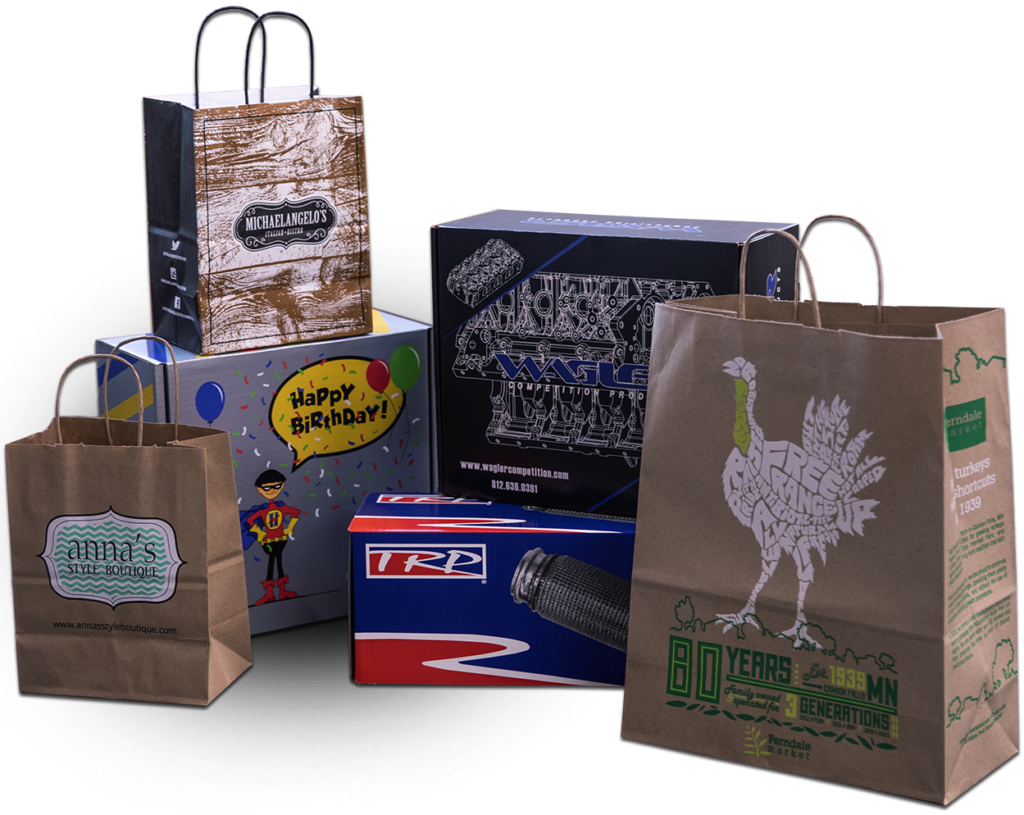

E-commerce packaging must do much more than simply hold a product. It must protect an order through a demanding parcel network, support efficient fulfillment, control shipping costs, and even represent the brand when the package reaches the customer.
As online sales grow, generic boxes and mailers can create avoidable problems. Products may shift during transit. Employees may use too much void fill. Oversized cartons may increase carrier charges. A polished brand may arrive in packaging that feels forgettable. Custom shipping packaging addresses these issues by tailoring the package to the product, shipping environment, workflow, and customer experience.
What Is Custom Shipping Packaging?
Custom shipping packaging is designed or adapted for a company’s specific products and fulfillment needs. Customization can include:
- dimensions
- material strength
- structure
- inserts
- dividers
- closures
- opening features
- printed artwork
The result does not have to be an elaborate, full-color box. A business might begin with a familiar box or mailer style in a better size, add one-color printing, apply custom tape, or include branded messaging inside. Other products may require a fully engineered structure with inserts that protect vulnerable components.
This distinction matters in e-commerce. Retail packaging is often designed primarily for shelf presentation. E-commerce-ready packaging must withstand sorting, stacking, vibration, drops, and last-mile delivery while still creating a positive experience when the customer opens it.
Protect Products and Reduce Damage
Product protection is the first responsibility of any shipping package. A strong design begins by identifying how an item could be damaged. Fragile corners, glass surfaces, bottle necks, screens, closures, and moving components may each need different support.
A closely fitted box or mailer can limit movement during transit. Dividers can keep several items from striking one another, while cushioning, corrugated components, wraps, or custom inserts can support vulnerable areas. The material and board strength should reflect the product’s weight, fragility, and shipping conditions.
This approach is more reliable than simply filling an oversized box with extra material. Excess filler can increase cost and packing time without consistently holding the product in place. Custom shipping packaging allows the protective design to follow the product’s actual shape and risks.
Before a large rollout, evaluate samples or prototypes for:
- product fit
- seal strength
- label placement
- ease of opening
- performance during realistic handling
Products with demanding distribution requirements may also benefit from formal transit testing that simulates hazards such as drops, vibration, and compression.
Right-Size Packages to Control Costs
Shipping expenses are not always based only on actual weight. Carriers may also consider dimensional weight, which reflects the amount of space a parcel occupies. When a lightweight product ships in a large box, a business may effectively pay to transport empty space.
Right-sized packaging can reduce that problem. A closer fit may require less corrugated material, cushioning, and tape. It can also improve warehouse storage and help more orders fit within a carrier vehicle or freight shipment.
The lowest-priced box is not always the least expensive option overall. E-commerce managers should consider factors, such as:
- packaging materials
- carrier charges
- void fill
- packing labor
- storage
- damaged products
- returns, replacements
- customer-service time
A custom package may have a higher unit price than a generic carton while still lowering the total cost per successful delivery.
Improve Fulfillment Speed and Consistency
Packaging affects the speed and accuracy of packing. Boxes that are difficult to assemble, products requiring several filler layers, or unclear package-selection rules can slow fulfillment and produce inconsistent results.
A practical custom packaging program should make it easy for employees to identify, assemble, load, seal, and label each package. Simple folds, integrated closures, tear strips, or clearly defined insert positions can reduce unnecessary steps. Standard pack-out instructions help employees use the correct materials and position products consistently.
Businesses should also avoid creating too many packaging variations. A large assortment of similar box sizes can consume storage space, complicate purchasing, and increase selection errors. A smaller, purposeful group of approved formats is often easier to manage. Pack-station charts, product photos, or written instructions can show which package belongs with each product or order combination.
Strengthen the Customer Experience
For many e-commerce customers, the delivered package is their first physical interaction with the brand. Custom shipping packaging can connect that moment with the colors, messaging, and quality customers saw online.
Branding can appear through printed boxes, mailers, tape, labels, tissue, interior graphics, or inserts. The best choices serve the customer rather than adding decoration for its own sake. An insert might offer:
- setup instructions
- care guidance
- a relevant recommendation
- a sample
- thank-you message
The outside of every shipment does not need to be highly branded. Expensive, sensitive, or privacy-related products may be better served by a discreet exterior with the branded experience reserved for the inside.
Easy-opening features matter, too. Tear strips, tabs, thumb notches, and perforations can make a package convenient to open without tools. These features should work alongside secure seals or tamper-evident elements so the shipment remains protected until delivery.
Reduce Waste Through Efficient Design
Sustainable packaging begins with using only what the shipment needs. Right-sizing can reduce corrugated material, void fill, tape, and transportation inefficiency before a business considers specialized materials.
Depending on the product and shipping environment, companies may also evaluate recycled-content, recyclable, reusable, or biodegradable options. Materials still need to provide adequate protection because a damaged product and replacement shipment can create more waste than a properly designed package.
Clear disposal or recycling instructions can help customers handle each component correctly. Environmental claims should also be specific. Instead of relying on broad labels, explain the improvement, such as reduced material use, recycled content, or the removal of an unnecessary layer.
Build a Practical Custom Packaging Strategy
A successful project starts with a clear requirements brief. Before discussing graphics, gather:
- product dimensions, weight, shape, and vulnerable areas
- common single-item and multi-item orders
- monthly volume and seasonal peaks
- damage, return, and replacement issues
- carrier or marketplace requirements
- packing workflow, labor, and storage constraints
- branding, budget, and sustainability priorities
These details help determine whether the best solution is a regular slotted container, tuck-top mailer, printed poly mailer, presentation box, or another format. They also reveal whether structural improvements (e.g., a better height, insert, opening feature, closure, etc.) could provide more value than elaborate printing.
Instead of converting the entire catalog at once, begin with one or two high-volume, high-damage, or high-value products. Produce a sample or small run, then compare the new packaging with the previous approach. Useful measures include package and carrier costs, packing time, void-fill use, damage and return rates, storage needs, and customer feedback.
A controlled pilot lets the team improve the design, standardize pack-out instructions, and build a stronger business case before expanding the program.
Find the Right Packaging Partner
Since 1954, Brown & Pratt has helped businesses address individual packaging needs through custom solutions, responsive service, and competitive pricing. We offer custom packaging and artwork customization along with more than 10,000 in-stock packaging and shipping supply items.
That range can help e-commerce and retail managers coordinate custom projects with the everyday materials needed to keep fulfillment moving. Brown & Pratt works with clients to identify packaging options based on the:
- product
- application
- order quantity
- budget
- brand requirements
Make Packaging Part of Shipment Performance
Effective custom shipping packaging balances product protection, shipping efficiency, packing speed, material use, customer experience, and cost. Businesses don’t need to transform every shipment at once. A focused review of one frequently shipped product can reveal opportunities to reduce wasted space, simplify packing, improve protection, and create a more professional delivery.
Start by gathering product dimensions, shipment volume, current damage information, and branding goals. Then contact Brown & Pratt about a custom shipping packaging solution designed around the way your business fulfills and ships orders.